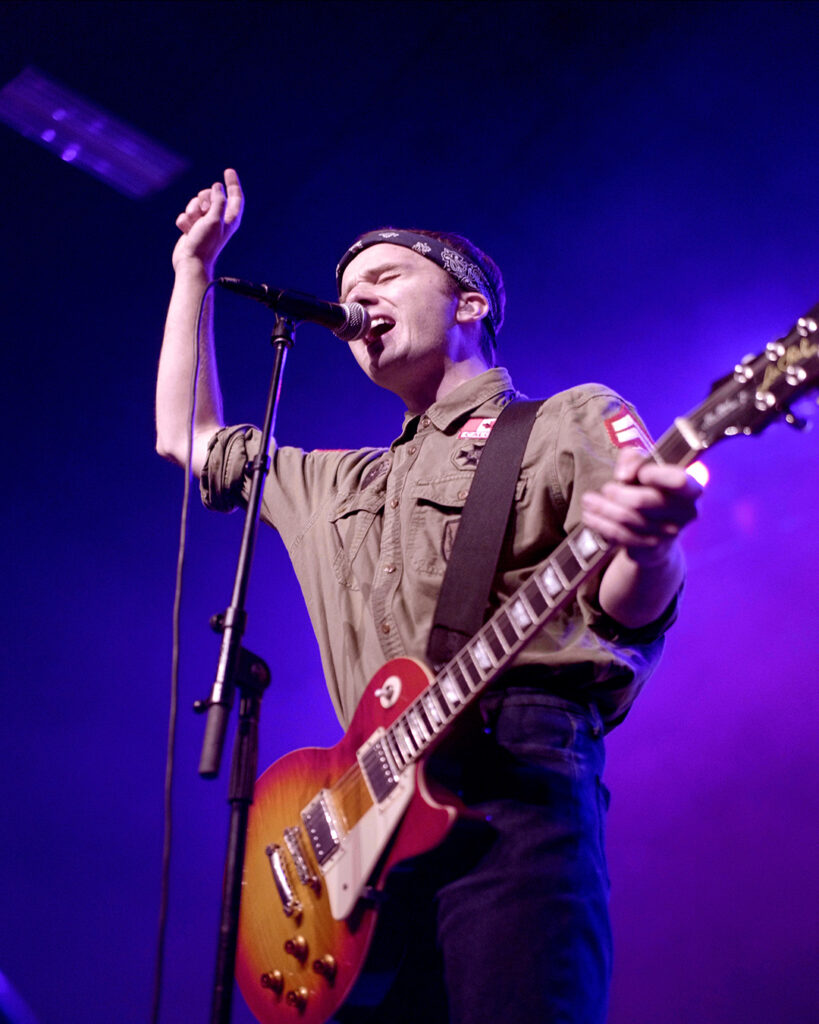
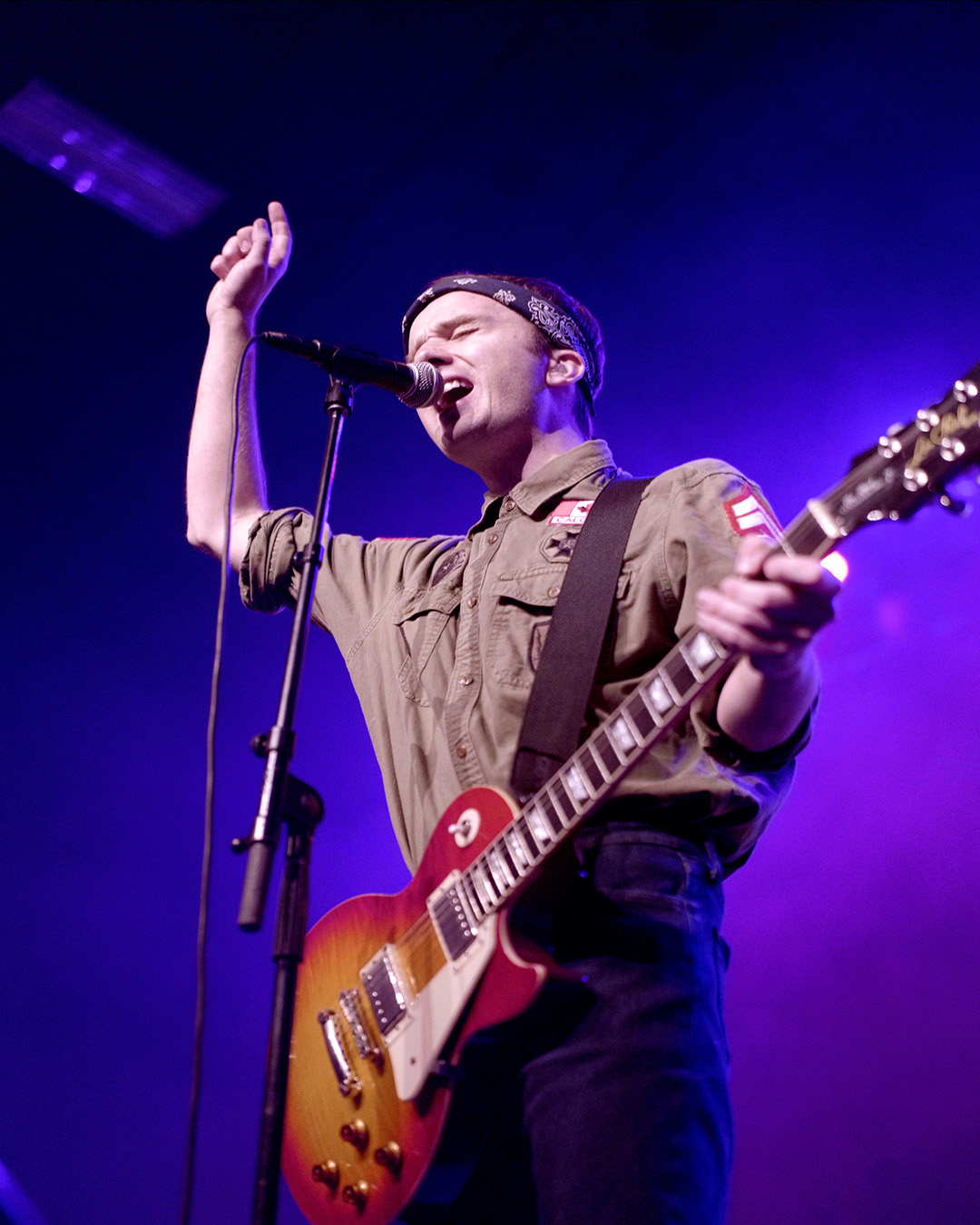
On October 18, 2025, more than 2,000 people packed into Edmonton’s River Cree Resort and Casino to watch a band step into a moment that could not be rehearsed. For Jackson Reed and The Silverbirds, opening for Nazareth was not simply another tour date or a résumé line. It was their first time playing a room of that scale, a night defined by uncertainty as much as anticipation. Reed remembers the stakes clearly now. “We could have fumbled the opportunity or been booed offstage,” he says. “Yet we won the crowd over with our songs and our energy.”
That performance became the foundation for Live in ’25, the Calgary-based band’s first EP in four years and their most revealing release to date. Rather than retreating to the studio after a career-defining show, Reed and his band chose to document it, capturing the adrenaline, looseness, and emotional exposure of a night that marked a turning point. The result is a live record that resists nostalgia and polish in favour of immediacy, presenting a band caught between arrival and ambition.
Live albums have become rare artifacts in contemporary pop and rock, often reserved for legacy acts or anniversary retrospectives. For a younger band still carving its place, the choice carries risk. Reed was keenly aware of that. “Not every band gets to play a show this big,” he explains. “I think it’s important for us to shout it from the rooftops that this actually happened.” There was also a practical logic. Recording live allowed the band to move quickly, sidestepping a lengthy studio cycle while still introducing six new songs. “It was truly a win-win to capitalize on the buzz of the show, and to get new original songs into the world.”
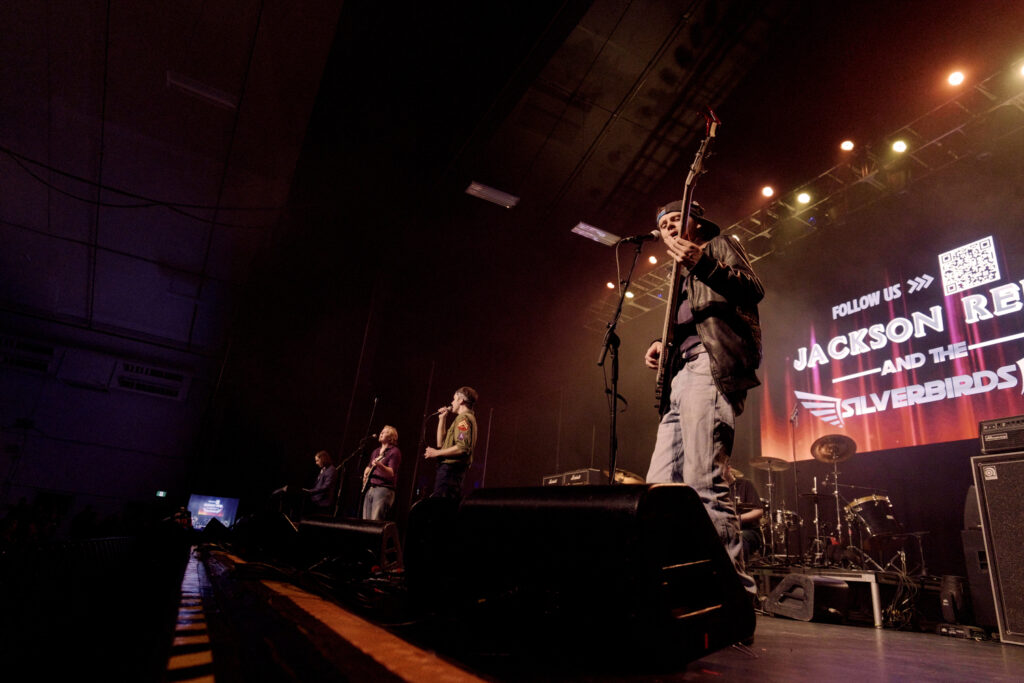
The EP captures the band as a cohesive unit, unassisted by backing tracks or studio corrections. “We don’t play to any kind of tracks or have anything helping us out up there,” Reed says. “It’s up to us to make all of the sounds you hear during our show.” In an era defined by digital precision, that decision feels almost defiant. Reed frames it more simply. “In this day and age of polish and perfection, I like that we’re doing it for real.”
That commitment to realness shapes the record’s texture. There are moments where tempos breathe and edges remain unfiled, but those imperfections become part of the narrative. Listening to the EP feels less like consuming a document and more like standing in the crowd, where unpredictability heightens connection. Reed believes that is the essential function of a live performance. “A live performance should have that element of realness to it,” he says. “That’s what sells the experience compared to just listening to music at home.”
Jackson Reed and The Silverbirds have often been described through the lens of power pop, with critics drawing parallels to the late seventies and early eighties. Reed has never resisted those associations. “I’ve never found those influences limiting because it’s what myself and the guys in the band like to listen to,” he explains. Artists like Bruce Springsteen and Tom Petty resonate with him not because of their era, but because of their emotional clarity. “I’ve always felt like I related a lot more to what they were saying in their songs than what I hear in a lot of newer music.”
What distinguishes Reed’s approach is his understanding of influence as a tool rather than a template. He points to that earlier period as one of experimentation rather than rigidity. “It was a very adventurous time for music where artists were trying out all kinds of different sounds and moods,” he says. That range is evident on Live in ’25, which moves from crowd-ready anthems to quieter, more introspective moments. Reed also sees a long-term advantage in drawing from a past that is becoming less immediately familiar. “As we get further and further away from that time period, I think our songs will sound fresh to people who aren’t as familiar with that generation of music.”
Tension between reach and retreat is one of the EP’s defining qualities. “Did I Miss Out” arrives with the immediacy of a singalong, while “Warmth of July” turns inward, revealing a more vulnerable side of the band. Reed resists the idea that these modes are calculated. “When a song comes to you, I find you just have to let it out instead of agonizing over it too much,” he says. “Sometimes it will be an anthem, and other times it will be something more low key.”
Vocally, Live in ’25 presents Reed at his most exposed. His performances stretch between restraint and release, reflecting a singer growing more comfortable with risk. Reed attributes that evolution to experience rather than intention. “I think my vocals are always improving,” he says. “I started singing much later than playing guitar, so I find my vocals get better with each subsequent release.” The live setting demanded adaptability, with each song requiring a different emotional register. “The vocals have to change to match the feeling that each song is creating.” The Nazareth show carried a symbolic weight that extended beyond the music itself. Reed recalls reading Geddy Lee’s autobiography during the lead-up to the performance, where Lee recounts Rush opening for Nazareth in their early days. That lineage lingered in Reed’s mind. “Since Rush is one of my favorite bands of all time, reading that was something that was on my mind during this whole journey,” he says. “It’s very cool that we can now add our name to that list of openers for Nazareth.”
Despite the historical resonance, Reed insists the band did not alter its approach to the set. Instead, he focused on staying present, guided by advice he received earlier that summer from Neil Giraldo, whom he interviewed on his podcast Guess That Record. Giraldo’s message was simple. Do not overthink the moment. “He said that the best thing to remember when playing these bigger venues is to have fun and not think too much about the circumstance,” Reed recalls. That advice proved grounding. “I made sure to just do my thing instead of changing up the routine.”
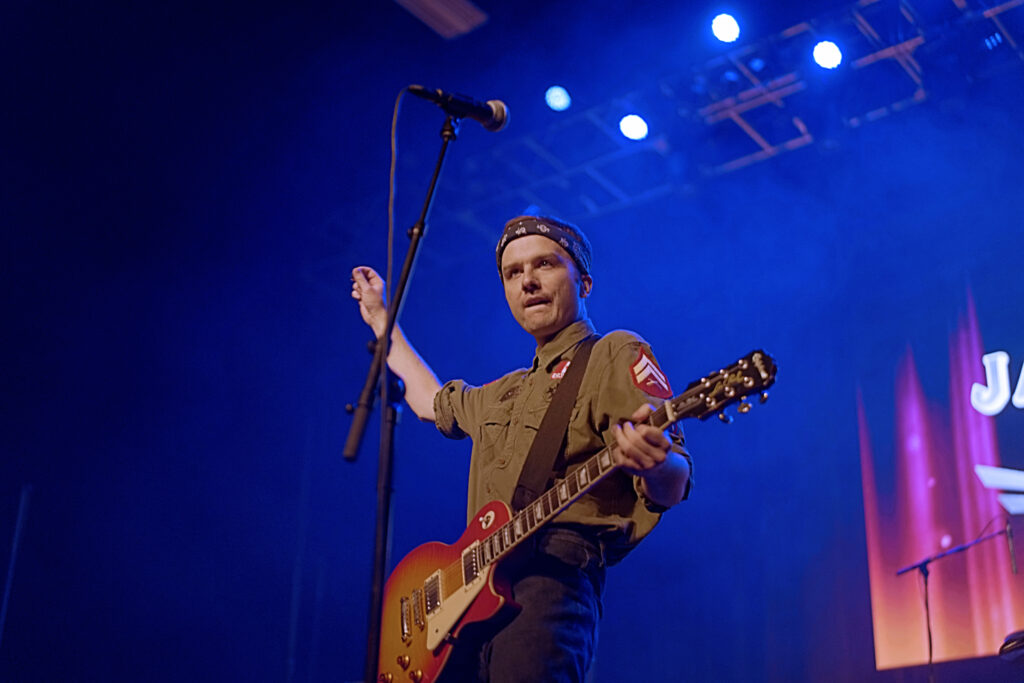
Looking back, Reed describes the performance as almost dissociative. “It felt almost out of body in a way,” he says. That sensation, paired with the audience’s response, confirmed the band’s readiness for larger stages. The validation extended beyond the crowd. Nazareth’s members complimented the band and acknowledged their performance during their own set. For Reed, that recognition mattered. “As an up and coming band, it’s really validating to have important people like that say good things about your music.”
Live in ’25 closes with a studio track that feels intentionally forward-looking, a polished coda that gestures toward what comes next. Reed does not see the EP as a conclusion. “I think it’s a continuation and improvement of the sound we’ve been crafting for the last four to five years,” he says. He resists the temptation to frame the release as a peak. “I’m not sure what will come next, but it will be fun to see where we end up.”
As the band’s profile has grown through touring, media appearances, and collaborations, Reed’s relationship to ambition has remained surprisingly steady. Success has not dulled his hunger. “I feel like we have a long way to go before we can be considered a true success story,” he admits. “I’m still hungry for more.” That restlessness animates Live in ’25, giving the record its urgency. It is not the sound of a band settling into comfort, but one testing its limits in public.
For listeners discovering Jackson Reed and The Silverbirds for the first time through this EP, Reed hopes the timing is clear. “Anyone that’s starting out is still getting in on the ground floor,” he says. “It’s an exciting time to be following us.” The record captures a band at a moment when possibility outweighs certainty, when growth feels imminent rather than guaranteed. In that sense, Live in ’25 functions less as a monument than as a snapshot. It preserves the electricity of a night when preparation met opportunity, when a young band proved it could command a room without sacrificing its identity. Reed puts it plainly. “With Live in ’25, listeners can feel what it is like to stand in the front row.” That closeness is the EP’s greatest strength, a reminder that sometimes the most honest way forward is to leave the tape running and let the moment speak for itself.
Featured Images: Artist Supplied