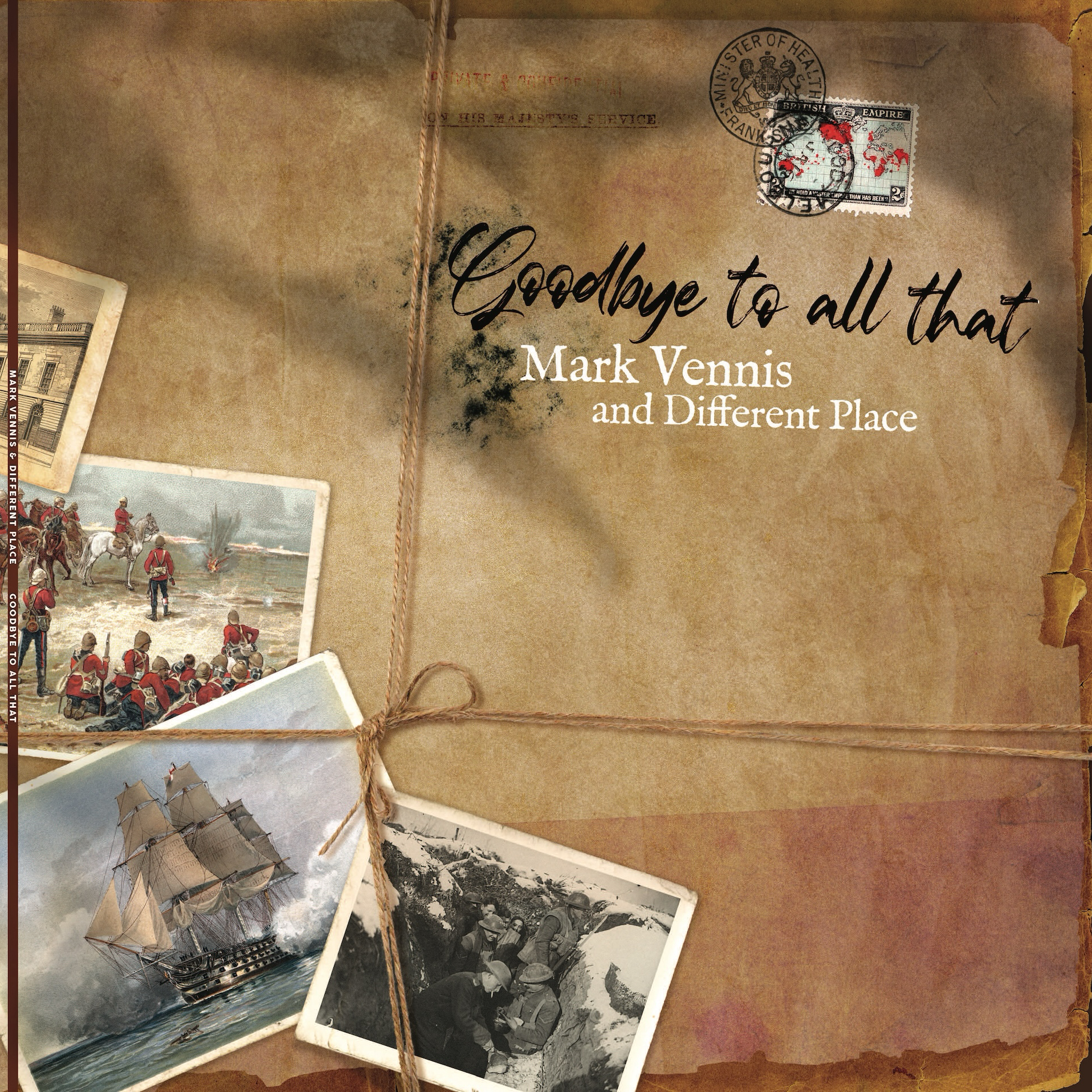
For more than a decade, Mark Vennis & Different Place have operated outside the churn of British indie cycles, building a body of work rooted in punk’s moral clarity and folk music’s storytelling tradition. Goodbye to All That, their fifth album, feels less like a pivot than a culmination, a record that gathers the band’s long-standing political instincts into a focused, historically literate statement.
Written, performed, and produced by Vennis alongside longtime collaborators Dave Sweetenham, Sean Quinn, and Brian Gee, the album is a 12-track exploration of British identity shaped by the legacy of empire. Rather than approaching the subject from a distance, Goodbye to All That inhabits the voices of soldiers, workers, merchants, captains, and the dispossessed, tracing how national myths are constructed and who ultimately pays their cost. The result is neither nostalgic nor polemical. It is reflective, uneasy, and deliberately unresolved.
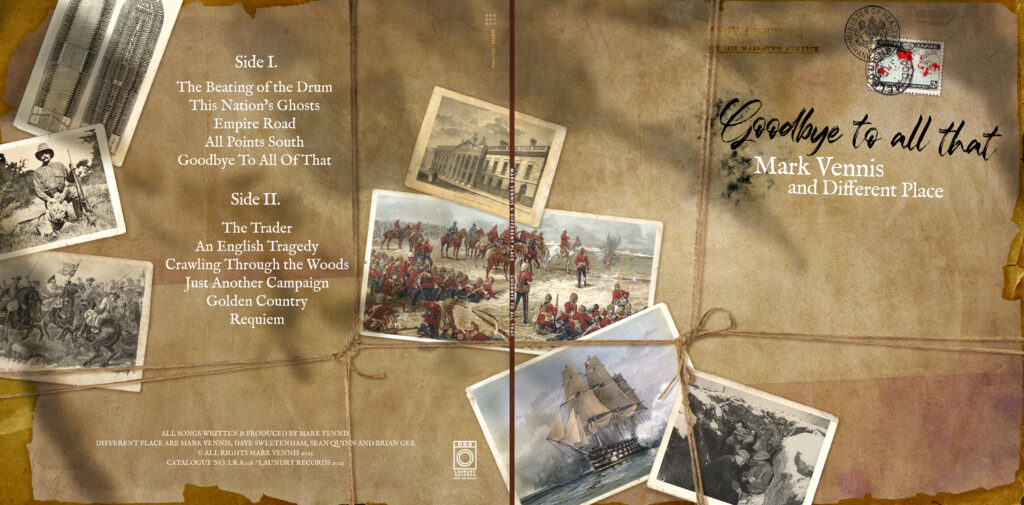
Musically, the record weaves together punk, folk, blues, and reggae, drawing from the lineage of the Clash, the Jam, and the Kinks while retaining a rough-hewn immediacy. Guitars dominate, but they rarely posture. Songs like “Empire Road” and “This Nation’s Ghosts” move with a steady, almost processional weight, allowing lyrics to take precedence over spectacle. Elsewhere, “The Trader” and “An English Tragedy” sharpen the band’s sense of narrative, using small details to suggest larger systems at work.
The album’s influences are worn lightly but thoughtfully. Echoes of the Kinks’ Arthur, Linton Kwesi Johnson’s late-70s work, and PJ Harvey’s Let England Shake appear not as homage but as shared vocabulary. Literary and cinematic references, from Robert Graves and George Orwell to Powell and Pressburger, shape the album’s worldview without overwhelming it. These touchstones function less as signposts than as evidence of a broader cultural reckoning.
Recorded at Laundry Studios in Hampshire, Goodbye to All That feels grounded in place and time, but it resists easy conclusions. Vennis frames the album as a question rather than a verdict, asking whether Britain has truly moved beyond the ideologies that shaped its past. In doing so, Mark Vennis & Different Place offer a record that speaks directly to the present moment, not by chasing relevance, but by refusing to look away from history’s long shadow.
Featured Image: Artist Supplied